Web and product

A site that explains what you do and makes the next step easy.

We design and build corporate sites, portals and redesigns with content architecture, accessibility and performance built in from day one — not bolted on at the end.

How a project is built
01
Content architecture
What is said, to whom and in what order.
02
Experience design
Hierarchy, templates and journeys.
03
Development
Semantic markup, CMS and components.
04
Integrations
Forms, CRM, analytics and internal systems.
05
Measurable conversion
Defined goals and events ready to track.
Order matters: without a defined content architecture, design decorates and development improvises.
At a glance

TouringXX’s web design and development service builds corporate sites, portals and redesigns for companies that need to explain a complex offering clearly. It is built for organisations whose current site misrepresents what they do, is hard to update or generates no enquiries. The expected outcome is a clear, measurable, accessible presence the in-house team can maintain.

What it is, concretely

A web project doesn’t start by picking a template or deciding colours. It starts by ordering what needs to be said, to whom and in what order. That content architecture then determines the navigation, the templates required and the development work.

We work on WordPress when the team needs autonomy to publish, and with custom development when the project demands bespoke logic or integrations a standard CMS doesn’t cover. The decision follows who will maintain the site, not technical preference.

Corporate sites WordPress Landing pages Portals Redesigns Custom development
Who it’s for

Companies whose site fell behind what they do today.

Companies with an offering that is hard to explain. Several services or audiences presented today as a flat list.
Organisations that can’t update their own site. Every change depends on an external vendor or on someone who has left.
Brands that grew and drifted out of alignment. The site reflects what the company was a few years ago.
Projects that need a bilingual version. Structure prepared for Spanish and English from the start, not translated afterwards.
If you sell online, catalogue, checkout and payment work is covered in E-commerce development. This page covers sites and portals, not stores.
Common situations

Signs the site needs work

Visitors ask about things the site already explains.
Publishing an update requires technical help.
The site looks fine on desktop and breaks on the phone.
There are pages nobody remembers creating or knows are still valid.
The enquiries that arrive don’t match what you want to sell.
There is no way to know which pages generate contacts.
Results

What changes with a well-built site

Commercial impact depends on the market and the proposition. What design does control is clarity, speed, accessibility and ease of maintenance.

A proposition people understand

The visitor grasps what you do and who for in the first seconds.

Journeys with a next step

Every page leads to a concrete action instead of ending in a dead end.

Autonomy to publish

The team updates content without depending on technical support for every change.

A solid technical base

Semantic HTML, good performance and AA accessibility as the starting point.

Ready to pursue visibility

Structure and data that allow SEO and GEO work later, without rebuilding the site.

Measurement from day one

Goals and events defined so you know what works and what to adjust.

Scope

What the work includes

Project types
Corporate site Full redesign Portal with private areas Campaign landing page Multilingual site Custom development
Built into every project
01Content architecture and template definition.
02Responsive design verified between 320 and 1440 px.
03WCAG 2.2 AA accessibility: contrast, focus, keyboard and labels.
04Performance: optimised images, lazy loading and Core Web Vitals.
05Technical SEO: semantic structure, metadata and structured data.
06Form, analytics and existing-system integrations.
07Training and documentation for the team that will maintain the site.
Common decisions

WordPress or custom development

WordPress
Custom development
· The team publishes and edits without technical help.
· Content that changes frequently.
· Tighter timelines and budgets.
· A known ecosystem that is easy to hand over.
· Bespoke business logic or specific calculations.
· Deep integrations with internal systems.
· Demanding performance or security requirements.
· Interfaces a standard CMS doesn’t cover.
The deciding question is not which is better, but who will maintain the site and how often the content will change.
How we work this service

Content first, interface second.

Designing over placeholder text produces pretty templates that later don’t accept the real content. That is why copy and structure are defined before the final layout.

01 Discovery

Goals, audiences, competitors and a review of what exists today.

Recibes: findings report and agreed objectives
02 Architecture and copy

Site map, structure of each template and final texts before design.

Recibes: approved architecture and final copy
03 Design and implementation

Interface built on real content, layout and loading into the chosen CMS.

Recibes: approved design and site in a test environment
04 Validation and launch

Device, accessibility, form and measurement testing before publishing.

Recibes: published site, documentation and training
What happens after launch is planned for. A freshly published site needs adjustments: content added, forms tuned, metrics reviewed. On delivery we define who makes those changes and with what support, instead of closing the project with no continuity.
Featured project

A real project, with its interface on show.

An editorial screenshot of the interface explains more than any scope description: hierarchy, typography, density and mobile behaviour.
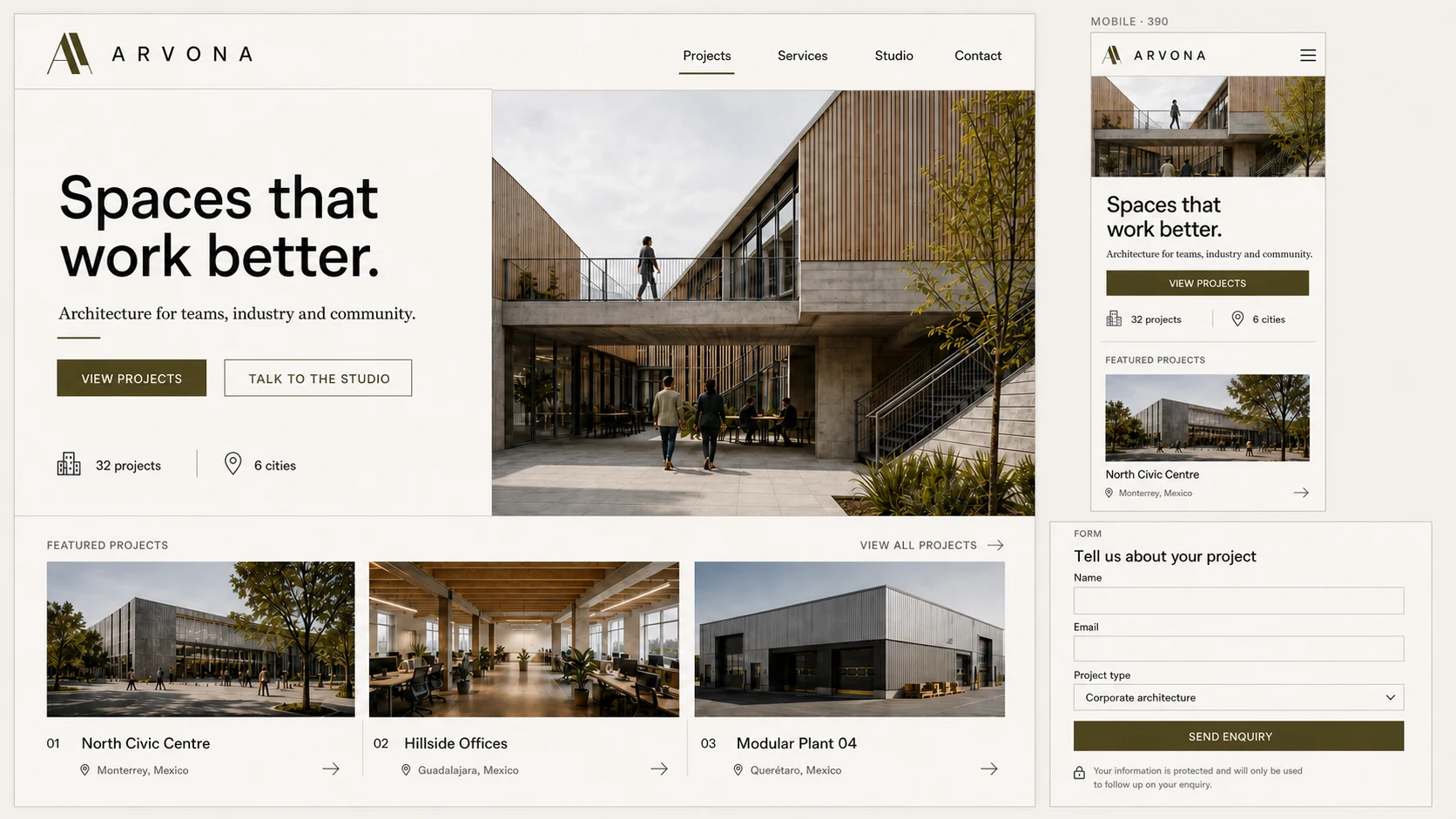
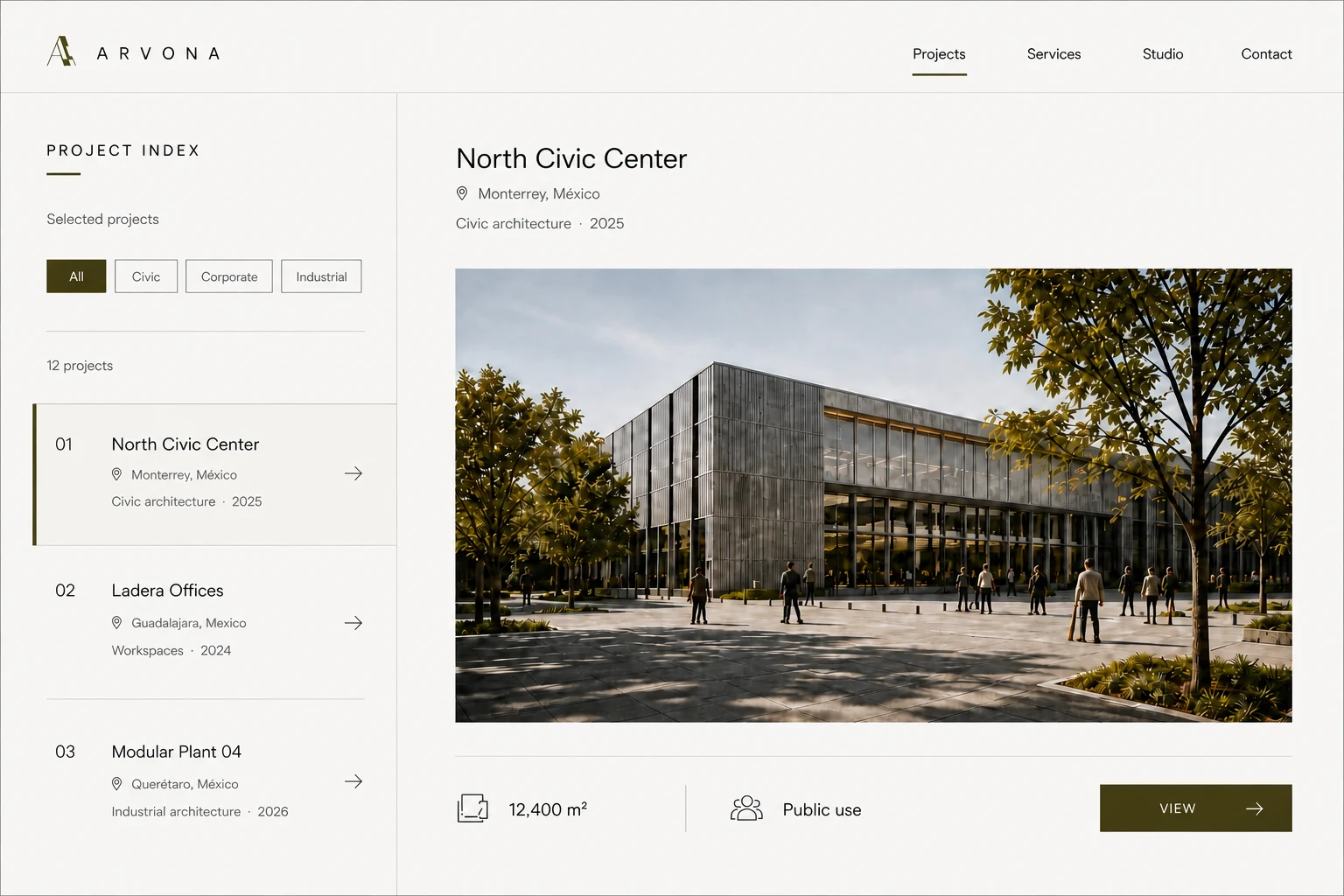
Visual pending 16:9
Featured web project — desktop view, mobile view and an interface detail
Visual pending 4:3
Detail crop — a real module at large size: form, listing or navigation

Every featured project carries a name, project type and associated service, and links to the case study when one exists.

Service: Web design and development

“This is my 4th job with Maxi (touringxx). Maxi always goes above and beyond what the job requires. […] Communication is always fast and the work is excellent. […] Highly recommended as a partner for web development.”

dd
doxiesdownunder · Client review
Original wording · source: Envato Studio
What can be claimed

A site doesn’t create demand on its own: it makes better use of what exists.

If nobody is searching for what you offer, a redesign doesn’t fix it; that work belongs to visibility and content. What a well-built site does change is what happens when someone arrives: whether they understand the proposition, whether they trust it and whether they find how to take the next step.

View all testimonials
Frequently asked questions

Common questions before starting

If your case isn’t here, write to us with the link to your current site and we’ll review it.

How long does a web project take?+
It depends on the number of templates, whether the content exists and how many integrations are involved. What delays a project most is not development but approving texts and images. That is why copy is defined before design.
Do you work on our current site or build a new one?+
Both are valid. If the technical base is healthy and the problem is content and hierarchy, improving what exists is usually faster. If the site is hard to maintain or out of date, rebuilding is the better route.
Who writes the copy?+
We can write it from interviews and existing material, or work on texts provided by the team. What we don’t recommend is designing with placeholder text and replacing it at the end.
Will the site be ready to rank?+
It ships with the right technical base: semantic structure, metadata, structured data and good performance. Ongoing content and authority work belongs to the SEO, GEO and visibility service.
Can we update the content ourselves?+
Yes, that is one of the design criteria. Clear templates and fields are defined, and documentation and training are delivered so the team can publish without outside help.
Does it include an English version?+
The structure can be prepared for two languages from the start, with separate routes and independent metadata. Translation or editorial adaptation is agreed as part of the scope.
What if we need changes after launch?+
That is normal. On delivery we define how those adjustments are handled: with one-off support, with a maintenance plan, or independently according to what the team can cover.

Services that usually go with it

A new site is rarely an isolated job.

To go deeper

The criteria we apply on web projects.

Tell us what your site should achieve and we’ll review it with you.

With the link to the current site and an idea of the goal, that is enough to propose whether a full redesign, a staged improvement or a one-off content job is the right route.