An identity that settles decisions, not just a pretty logo.
Naming, logo, visual system and usage manual. The deliverable isn’t a file: it is a set of rules that lets anyone on the team produce a piece and have it look like the same brand.
TouringXX’s branding and visual identity service builds the system a company presents itself with: naming, logo, palette, typography, applications and usage manual. It is built for businesses launching and for brands whose image no longer matches what they are today. The expected outcome is a documented system that lets you produce any piece without improvising and without asking again on every decision.
The logo is the most visible part, not the most important
What holds an identity together isn’t the symbol: it is the consistency with which it is applied. Which typeface a headline takes, how much air is left around the logo, which exact green is the brand green, how an invoice looks and how an advert looks. Those decisions are taken once and documented.
When they aren’t documented, each person resolves as best they can and the brand goes blurry. Not for lack of care, but for lack of rules.
Brands starting out and brands that no longer resemble what they were.
Signs the identity needs work
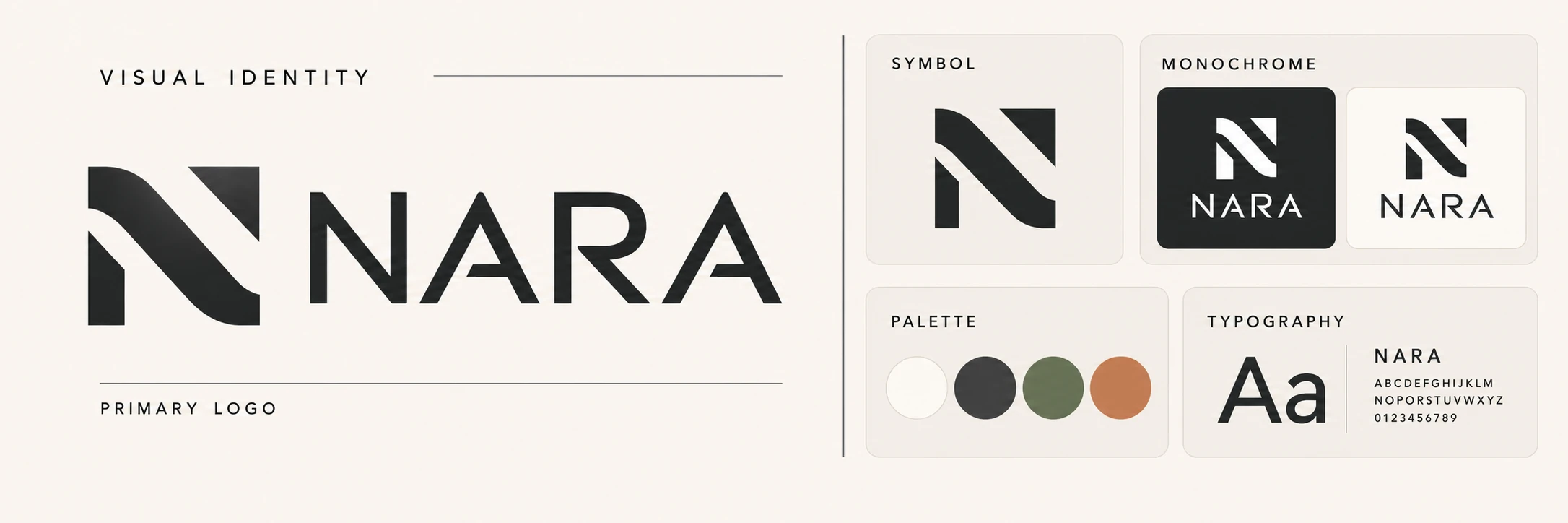
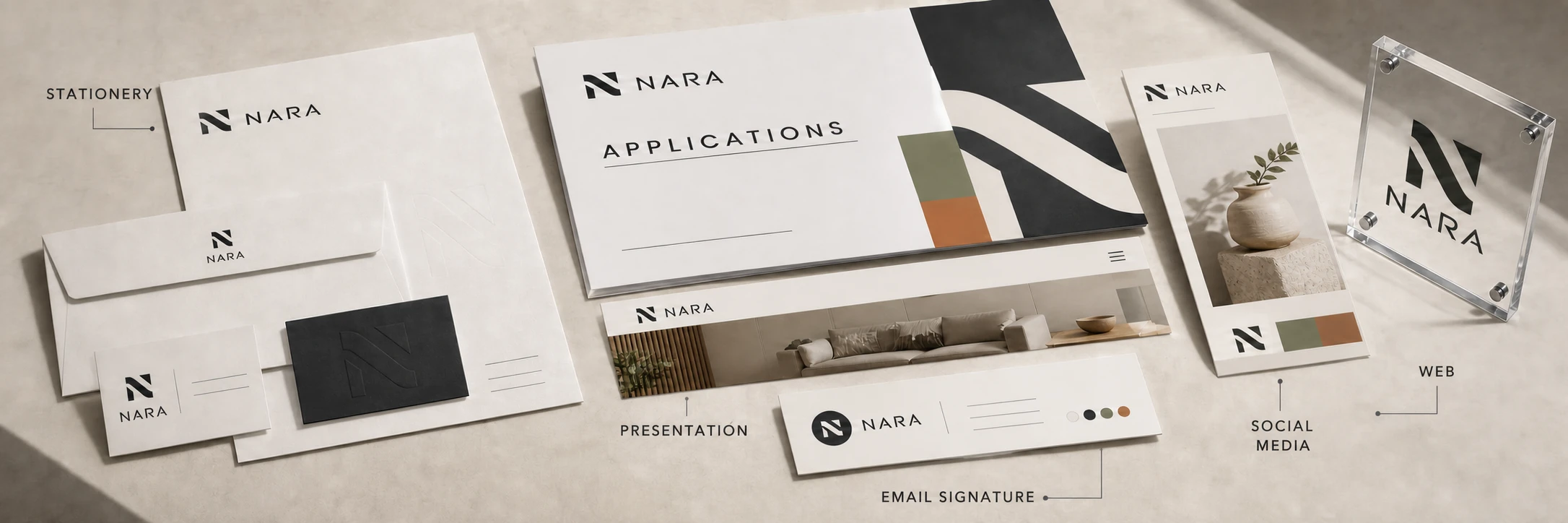
What makes up an identity
Not every project needs all four layers. A brand that already has a name and a logo may need only the system and the manual.
What the brand manual contains
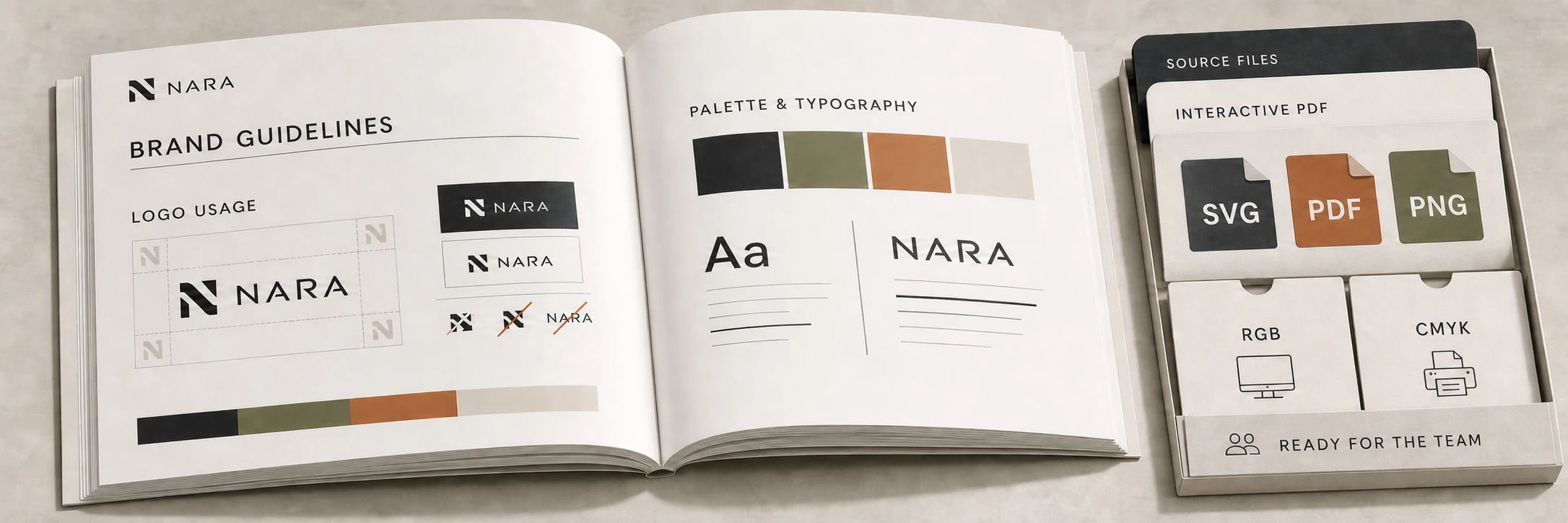
A manual is useful if somebody opens it to settle a concrete question and finds the answer. That is why it is written in terms of decisions — what to do in each case — and not as a gallery of plates.
Delivered as a navigable PDF with the source files organised by type of use.
A name that is also available
Finding a good name is half the work; the other half is checking it can be used. An excellent name with the domain taken and a similar registered trademark in the same sector is worth nothing.
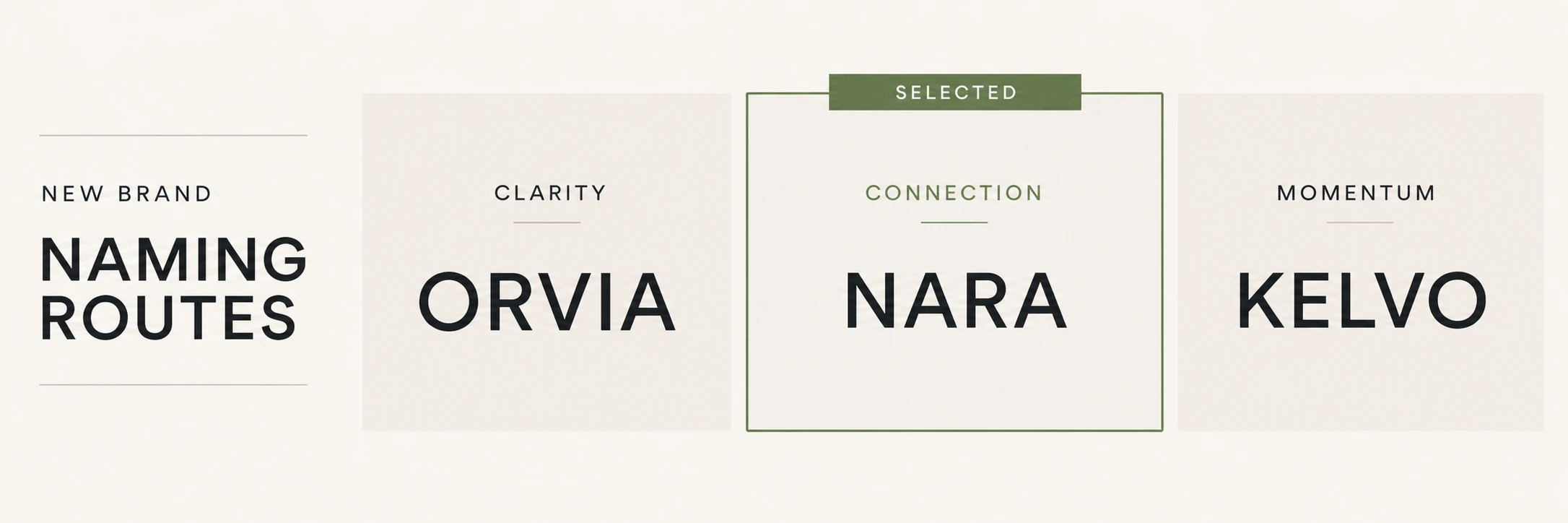
First we define what it must convey and what it must avoid. Without that agreement, any name is arguable.
Routes with different logics are proposed — descriptive, evocative, invented — not variations of the same one.
What it means and how it sounds in the markets where the brand will operate is reviewed.
Domain, social handles and obvious prior art are verified before presenting, not after.
The prior-art search we carry out is indicative and serves to rule out the obvious cases. Legally valid verification and registration are carried out by a specialist firm.
What changes with a defined identity
Almost all the effects are operational: decisions come faster, production costs less and there is less arguing. Brand perception improves with time and sustained consistency, not on launch day.
What is documented isn’t debated on every piece: you consult the manual and apply it.
With the system defined, each new piece starts from existing rules rather than an exploration.
The website, the printed material and social are recognisable as the same brand with no extra effort.
People with no design training can resolve simple pieces without breaking the identity.
A well-built system accepts new products and sub-brands without redoing everything.
The problem of the pixelated JPG logo circulating by email comes to an end.
Few routes, well argued.
We present two or three routes that differ from each other, each with its reasoning. Showing twenty similar variations doesn’t help you choose: it turns a strategic decision into a matter of taste.
The business, the audience, the visual competition and what the brand must communicate are reviewed.
Two or three distinct creative routes are presented, each with its argument and sample applications.
The chosen route is taken to a complete system: versions, colour, typography and applications.
The usage manual is written and the files organised by type of application.
An identity is judged applied, not in the logo.
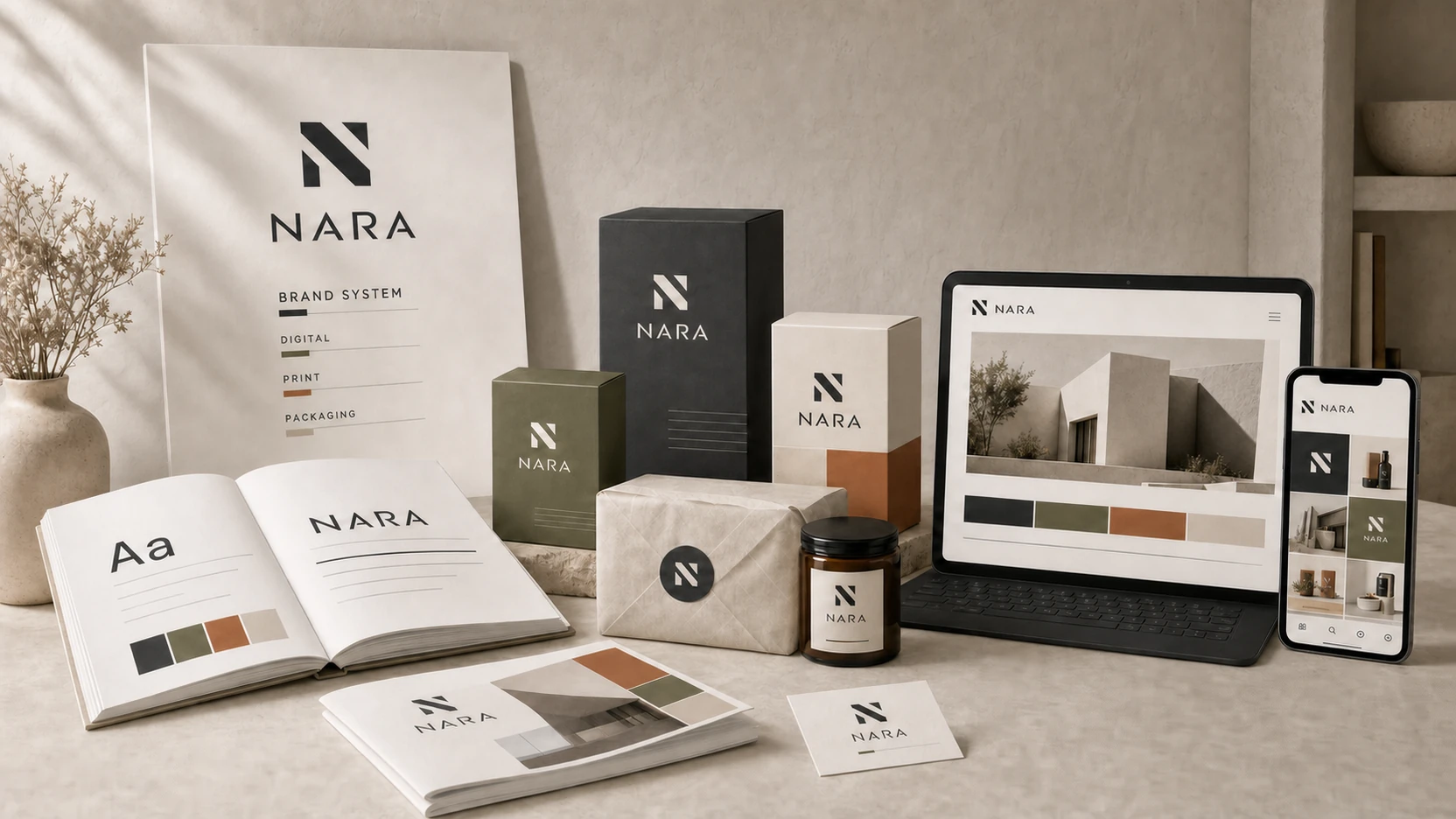
Logotype, typography, palette and real applications — digital, print and packaging — shown together: that is how you see whether the system holds up.
“I am very satisfied with the express logo customisation service. The quality of the work was very high and communication with the provider prompt and efficient. I highly recommend it.”
Original wording · source: Envato Studio
A brand is built over time; we build the system.
A redesign doesn’t generate sales by itself. What it does is make the company present itself coherently and professionally at every point of contact, and stop that depending on who builds the piece. Reputation comes later, from the product and from time.
View all testimonialsCommon questions about brand identity
The most frequent are about timelines, file ownership and how far the redesign goes.
Services that usually go with it
A new identity debuts somewhere: almost always on the website and in printed material.
To go deeper
When a redesign is the right call and how to sustain coherence afterwards.
Applying the system once it is defined
With the identity already built, AI Hub lets the team generate and adapt images, pieces and application materials with the platform’s image and design tools.
Brand strategy, the visual system and the usage guides are built here; the platform helps apply them, not define them.
Explore AI HubTell us where your brand stands today.
With what already exists — or with a blank page — we define whether the project is a complete identity, a partial redesign or simply tidying and documenting what already works.